

In this article follows my travels from my Office to Ireland & my carbon emissions for the journey with options to reduce my carbon footprint.
After an early start and car travel to my local Train Stations in Chichester to start work on a three-day audit in Ireland. I wait on a cold platform for my train to arrive to take me to my local airport, London Gatwick. So called because it is no-where near London but make Londoner’s feel comfortable to choose it as a nearby alternative to London Heathrow, which is in Greater London.
My train arrives 4 minutes later than scheduled but that is a good day. And before long, I am travelling through the West Sussex countryside.

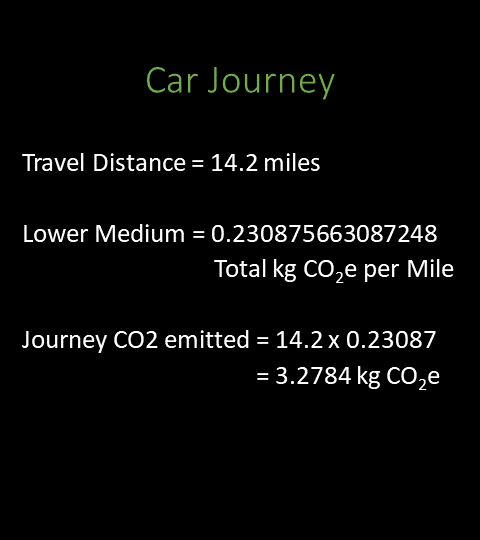
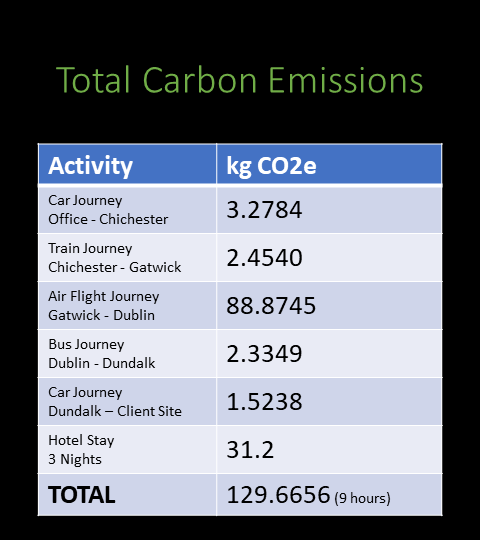
It is useful to reflect on my carbon footprint of my journey, so far. My car journey to the train station is 14.2 miles, which can be converted into a total of 3.2784 kg carbon dioxide equivalent.
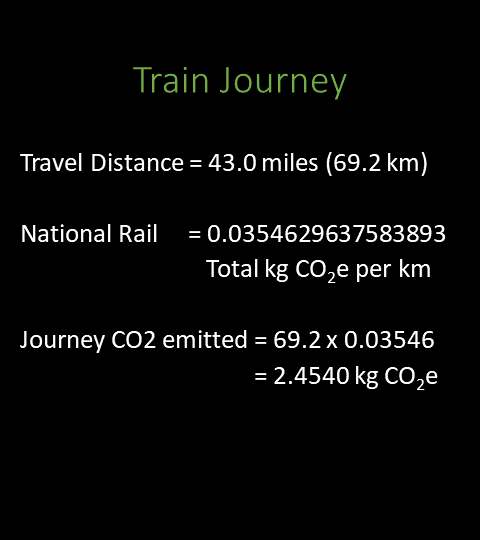
Just over an hour later, I arrive at London Gatwick (or to the locals, Gatwick Airport). Overall, my train journey has been 43 miles, which converts into 2.4540 kg carbon dioxide equivalent.
Then, it is a short walk to the station exit. And an even longer walk to the terminal themselves.
Today, I am travelling on the lovely, RyanAir, and needed to check-in my hand luggage. I hope that I will see it again at the other end of my flight. Last time they lost my luggage. But I try not to be negative about my experience with RyanAir. I would be interested in your views in the comment box below. Up to Departures, which is busy as usual.

Fortunately, I have an American Express Platinum card, which is useful as a credit card but, even more useful, for the Priority Pass which gives free access to airport lounges in most airports.

So, even though, RyanAir do not have a lounge access, I can take some time to access a late breakfast and relax a bit before my flight. The lounge is not so busy and I chose my breakfast options and a seat in quick succession. Before long, it is time to walk to my Gate to catch my flight. It looks like it will be a busy flight as we walk out onto the tarmac to board our plan.
Once in my seat, which I paid for the additional legroom as I am about 6 foot. I settle down for the take-off and flight to Dublin.
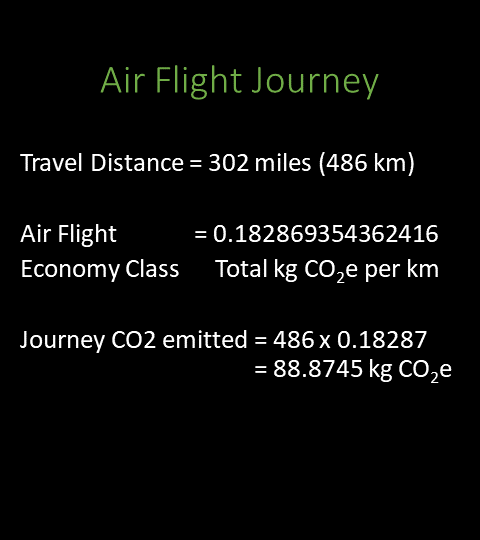
My flight was a short one and soon arrived into Dublin Airport in a slightly speeded up sequence as I reflect on my flight’s carbon footprint at 88.8745 kg carbon dioxide equivalent for my journey from Gatwick to Dublin.
Then, walked the tarmac again to enter the terminal for immigration and customs. A short wait for my luggage to come off the carrousel. And I am off.
While still in the terminal, I look for my bus the 100X to Dundalk, which is my final destination. It leaves in 28 minutes, so I easily clear the terminal and get to my bus stop as it is less than five minutes way. And there is my bus.

After a pleasant hour on the bus, I exit at my stope outside the Dundalk Institute of Technology and am greeted by a wind turbine adding to the sustainability of the local area.

Crossing the busy R132 road, it is a short 10 minute walk to my home for the next three days – the Crowne Plaza Dundalk. It should be noted that the hotel has since been renamed as The Gateway Hotel.

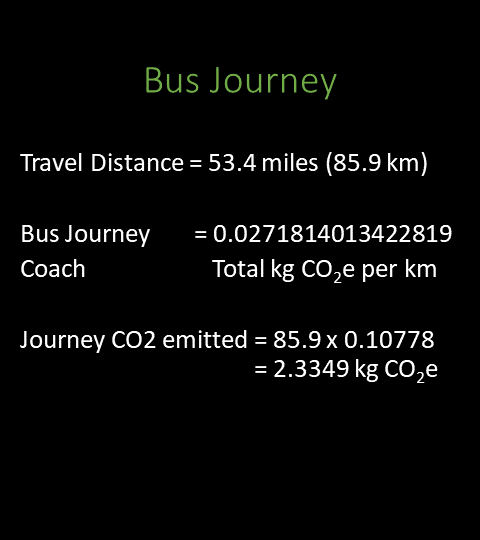
Just time to, finally, reflect that my journey is at an end. After nine hours of travelling and that the final component of my journey today was the carbon footprint of my bus journey from Dublin to Dundalk, being 2.3349 kg carbon dioxide equivalent.
So overall my journey from door-to-door calculation needs to include the short car journeys to the site for my audit and the hotel nights to my carbon footprint.
So excluding my return journey, my carbon footprint for the day’s journey, my hotel and work journeys is 129.6656 kg carbon dioxide equivalent.
Could I have done better?
Alternative Travel Options
Well, yes but with some important differences.
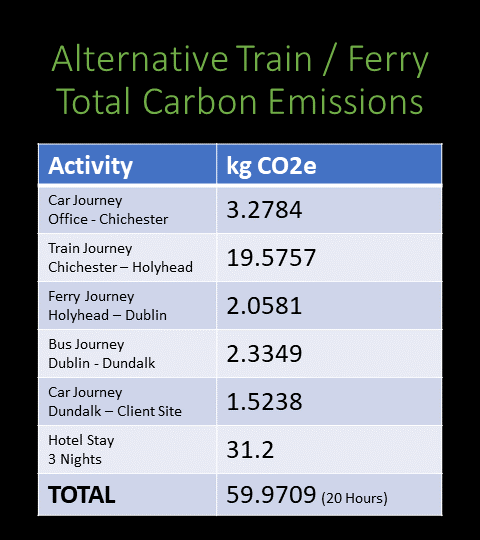
One alternative would be to have taken the train and ferry to Ireland, which would have lowered my carbon footprint to 59.9709 kg carbon dioxide equivalent but would have doubled the travel time.
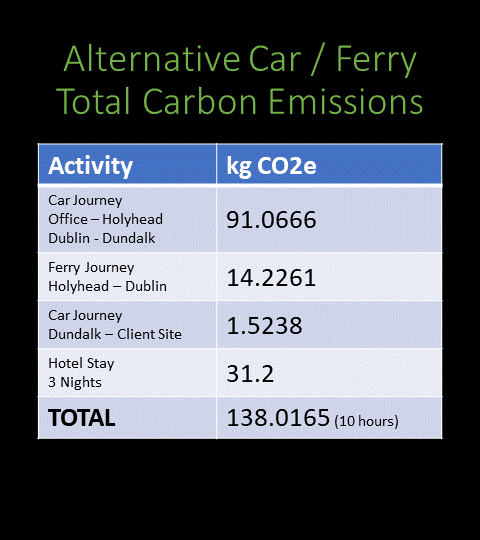
A variation on that journey would have been to drive to the ferry, which would have increased my carbon footprint at 10 kg more than the flight option and double the train / ferry option at 138.0165kg carbon dioxide equivalent but, strangely taken the same time as my flight.
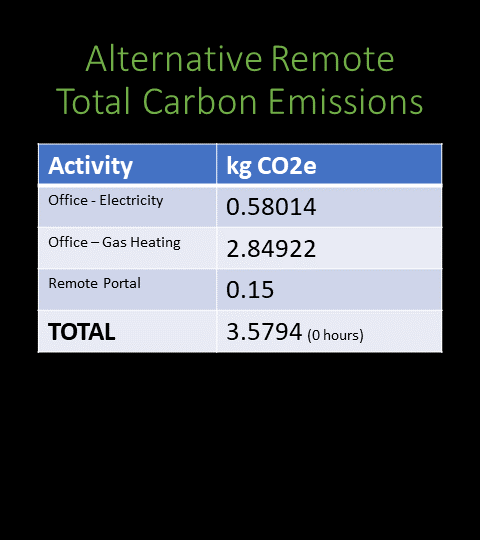
The final option, which I would, normally, choose is to undertake the audit by a remote meeting platform, such as Microsoft Teams or Zoom. That option still has a carbon footprint but at less than 3.5794 kg carbon dioxide equivalent is easily the lowest carbon option and is kind to my soul but literally having no travel outside of my home.
If this article has helped to advance your understanding of a typical travel day by an environmental and sustainability consultant & the transport options that can be chosen for low-carbon and low travel time.

I welcome your thoughts on my chosen journey option and the alternatives. Which travel option would you have chosen? Please leave a comment in the box below, if this video has help you.
If you enjoyed this article, you should check out our YouTube Channel – EMSmastery, where you can watch our videos, such as our video accompanying this article on Environmental Consultant’s Journey from UK to Dublin: Insights & Carbon Footprint and subscribe in our YouTube channel for new videos released each week.
#lowcarbontravel #carbonfootprint #EMSmastery
Nice article, thanks for posting. I’ve been thinking about this comparison between rail & sail and flying myself, as I regularly need to travel between Dublin and London for work. Would be interested to understand where your various data has been drawn from?
Glad that you enjoyed the video – The data used for the carbon footprint of my journey was the Greenhouse gas reporting: conversion factors published by the UK Department for Energy Security and Net Zero with the latest version available at https://www.gov.uk/government/publications/greenhouse-gas-reporting-conversion-factors-2024
I will aim to publish a further post and YouTube video on this topic later this year.